Why Windows RT tablets are set to fail

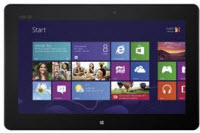
Tablets powered by Microsoft's new Windows RT operating system have made an appearance in the listings of online retailers, and based on what I've seen so far, they are destined for failure.
The first Windows RT tablet to appear on the radar is the Asus Vivo Tab RT, turning up in the listings on a number of retailers, including NewEgg and TigerDirect.
What's so wrong with the long-awaited tablets?
Price
The most obvious problem is price. The base tablet starts at a grimace-inducing $599, which is $100 more than you can pick up a base iPad or Android tablet for. While there are some hardware differences between the Asus Vivo Tab RT and its Android cousin, the Asus Transformer Prime, most of that $100 is down to the cost of the Windows license -- in other words, a Windows tax.
The price surprises don't end there. The Asus Vivo Tab RT can be docked into its own part-keyboard part-battery pack. This feature adds another $200 to the price -- if you shop around you can grab it for $150 -- taking the base package to a stratospheric $799.
Rehash of Android hardware
Another problem with the Asus Vivo Tab RT is that it's not strictly speaking new hardware. Instead it's a rehash of the Android-powered Asus Transformer Prime, which retails for $499. The Asus Vivo Tab RT features double the memory -- 2GB instead of 1GB -- but it has the same Nvidia Tegra 3 processor, the same 10.1-inch 1280x800 IPS display, and the same 32GB of storage.
The fact that the Asus Vivo Tab RT and the Asus Transformer Prime look like twins separated at birth, only the Windows RT one has a heftier price tag, is bound to raise a few eyebrows.
Specification soup
Rather than being told in plain English what the Asus Vivo Tab RT tablet can do for me, I'm faced by a mass of specification. I know what a Tegra 3 is, and why 2GB of DDR3 is a good thing, but the average consumer isn't going to have a clue.
It's a win for Apple and the iPad.
Apple doesn't spend much time boring people with specifications. Instead it offers two iPads -- "Wi-Fi" and "Wi-Fi + Cellular" -- in three different storage sizes -- 16GB, 32GB, and 64GB. Simple. People understand the difference between the "Wi-Fi" and "Wi-Fi + Cellular" models, and the concept of storage is easily understood by all.
If Asus is anything to go by, Windows OEMs are planning to sell Windows RT tablets in much the same way that they sold PCs two decades ago -- by focusing on the specifications. This was a tactic that worked when CPUs were measured in megahertz and hard drives in single-digit gigabytes. But these days buyers -- consumer and enterprise alike -- care less about what's inside a computer and more about what it can do for them.
This is a lesson that most Windows OEMs have yet to learn.
Image source: Asus.