Academic file-sharing spurred on by e-reader use?

Many of Generation Y are known for obtaining copyrighted material online. It's that episode you missed of your favourite television show, or the album that you simply must have right now.
However, could this tendency to 'pirate' extend further, and become more extensively used to save money for academic purposes?
Buying sometimes dozens of textbooks every year is expensive. Specialised subjects require you to read certain books and acquire journal extracts. Students groan at the rising cost of course books and their photocopying bill. And, with the poor jobs market, even fewer can gain employment to support their study efforts.
The use of e-readers like the Amazon Kindle or Barnes & Noble Nook is extending, albeit slowly. Students may be able to save money by purchasing digital versions of their course textbooks. But the current range available may be too limited for several years yet of university entrants to cause a more noticeable shift in purchase behaviour.
Considering this, I ran a few quick searches across torrent indexing sites, using well-known academic publisher names and general study topics. The purpose was to see whether any e-books, audio books or academic journals that were usable at university were available to download for free.
What did I find?
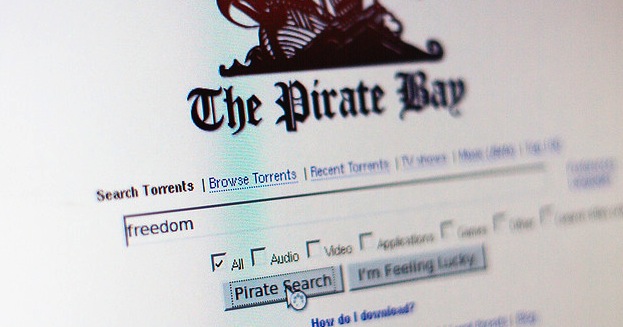
The most recent, or newly published academic books were not available -- and that stands to reason. It takes time for someone to purchase or 'acquire' a publication, create a torrent, release it, and then 'seed' it.
If it comes down to the latest 'must-have' book on Biological Anthropology from Oxford University Press or the latest episode of Dexter, you know which one is going to appear first.
After digging further, my immediate assumption was that publications available on peer-to-peer networks were mainly humanities-based. Subjects like philosophy and English were abundant.
The popularity of these torrents I labelled due to the concept of 'classic' titles that would always be part of a certain subject curriculum, and always be required to read.
However, after only a few minutes more, I discovered thousands of e-books and audio titles ranging from mathematics and medicine, to childcare and computer engineering.
Browsing for my own subject of anthropology, I was surprised to discovered a copy of a publication that cost me £75 ($116) when I purchased it three-years ago.
Journals were rarer than book titles, although there were some interesting examples.
One torrent I found contained 18,592 scientific publications. The torrent, uploaded by Greg Maxwell, explained in the torrent description that he did it as a protest against the "poisonous industry" of academic publishing.
"Authors are not paid for their writing, nor are the peer reviewers," he said. "Yet scientific publicans are some of the most outrageously expensive pieces of literature you can buy."
There was also hundreds available from The Institute of Electrical and Electronic Engineers, the complete collection from the American Mathematical Society, and a range of 'subject' collections that contained books, journals and audio debates on subjects ranging from finance to Spanish.
Many of the book titles available were license-expired (at least in the U.S) and available on websites such as Project Gutenberg for free. However, many were not, including publications that were released earlier this year.
When it comes to journals, some of the content shared on torrent networks is also already available for free. Services including JSTOR host downloadable journal articles for the public. Currently, the free range is 6 percent of the total number of articles they host, with the rest available through a subscription-based model.
Many journals become public domain for university students. Part of membership includes subscription services that universities pay for in order for students to download and access the papers they require. It would take far more time for a student to trawl through torrent lists to find one publication than it would to perform a search via a subscription they already have for free.
Perhaps this explains the limited popularity of journal torrents in comparison to e-books?
The range of academic books, however, was far more extensive.
I suspect the popularity is not necessarily due mainly to student downloads, but if e-readers become more ingrained in university lives, then it stands to reason the demand for these publications will increase.
File-sharing is widespread through college and university -- a fact that universities may prefer to keep quiet. Where books are no longer found in print, journal articles that are nearly impossible to find are readily sent via email from lecturer to student.
It's only one step further to take this concept and download other titles you need independent of your seminar leaders. That is, if you can find them.
When you think of 'torrents', most would think of movies, television shows -- perhaps even computer games. But how long before this extends to, "try and save some beer money"?.
Torrents rely on the popularity of files and community interest -- or they generally die. However, it only takes one person to keep access to a publication available.
Academic theft may only be in its fledgling stage in comparison to what it could become. But this could be the perfect time for publishers to move rapidly towards concepts like academic journal and rental services to offer a legal alternative before the issue becomes more widespread.
Related: